

Good KPI examples turn overwhelming data into clear insights, helping organizations move forward with confidence.
If you’re setting goals for your business but not measuring them effectively, you’re likely shooting in the dark. That’s where KPIs (Key Performance Indicators) become invaluable. Whether you’re managing a small business, handling a team, or optimizing a process at Company Name, KPIs help you stay on track and make informed decisions.
In this detailed guide, we’ll explore what KPIs are, with KPI Examples, why they matter, and share practical, real-world KPI examples across industries.
Table of Contents
Table of Contents
What Is a KPI?
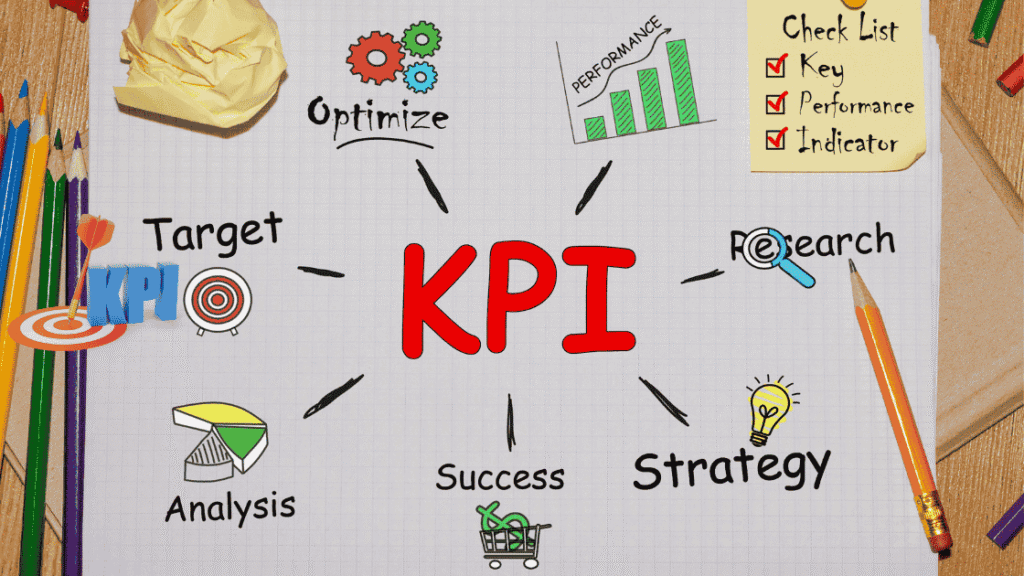
A Key Performance Indicator (KPI) is a measurable value that reflects how effectively a business, team, or individual is achieving its objectives. Think of KPIs as the scorecard you use to assess whether your strategy is working or needs tweaking.
KPI vs Metric: What’s the Difference?
- Metric: A number or measurement.
- KPI: A strategic metric that directly relates to achieving a key goal.
For instance, the number of website visitors is a metric. The conversion rate of those visitors into paying customers is a KPI because it directly reflects business goals.
Why KPIs Are Essential
Tracking KPIs isn’t just about numbers, it shapes behavior, focuses energy, and gives direction. Here’s what makes KPIs so powerful:
- Transparency: Everyone knows what success looks like.
- Accountability: Teams have clear targets.
- Focus: Cuts out noise and focuses on what truly matters.
- Improvement: You can’t improve what you don’t measure.
- Motivation: It’s easier to stay inspired when you see progress.
A business without KPIs is like a ship without a compass, it may move, but there’s no guarantee it’s heading in the right direction.
Types of KPIs (With KPI Examples for Every Function)
Let’s explore KPIs across different business areas to give you a complete picture.
1. Marketing KPIs
These are used to measure brand awareness, lead generation, and customer engagement.
Common Marketing KPIs:
| KPI | What It Measures |
|---|---|
| Website Traffic | Number of visitors on your website |
| Conversion Rate | % of visitors turning into leads/customers |
| Bounce Rate | % who leave after one page |
| Cost Per Lead (CPL) | Cost to acquire a lead |
| Return on Ad-Spend (ROAS) | Measures how much revenue you earn for every dollar you spend on advertising. |
Example:
KPI Examples: Generate 500 leads per month
Goal: Increase leads by 50%
Time Frame: Next 90 days
Strategy: Launch a targeted social media campaign and optimize landing pages
2. Sales KPIs
Sales KPIs monitor performance at every stage of the sales funnel.
Popular Sales KPIs:
- Monthly Sales Growth
- Lead-to-Customer Conversion Rate
- Customer Lifetime Value (CLTV)
- Average Purchase Value
- Opportunity-to-Win Ratio
Example:
KPI Examples: Close $50,000 in recurring revenue each month
Goal: Increase average deal size
Action: Upsell existing customers and offer bundled plans
3. Customer Service KPIs
Happy customers = a successful business. These KPIs measure satisfaction and retention.
Essential Customer Service KPIs:
| KPI | Description |
|---|---|
| Net Promoter Score (NPS) | Likelihood of customer referrals |
| Customer Satisfaction Score | % of satisfied customers |
| First Response Time | Speed of responding to queries |
| Ticket Resolution Time | Time taken to solve customer issues |
Example:
KPI Examples: Maintain an NPS above 50
Goal: Increase customer loyalty
Approach: Use follow-up surveys and personalize support
4. Operational KPIs
These help improve daily business efficiency and reduce costs.
Operational KPIs to Track:
- Order Fulfillment Time
- Inventory Turnover Rate
- Average Production Time
- Cost per Unit Produced
- On-Time Delivery Rate
Example:
KPI Examples : Fulfill 95% of orders within 48 hours
Goal: Improve customer satisfaction
Method: Streamline warehouse and delivery operations
5. Financial KPIs
Financial KPIs help assess profitability, stability, and growth.
Common Financial KPIs:
| KPI | Purpose |
|---|---|
| Gross Profit Margin | Total profitability |
| Revenue Growth | Increase/decrease in revenue |
| Operating Expense Ratio | % of expenses compared to revenue |
| ROI | Value generated per investment |
| Cash Flow | Availability of cash to run the business |
Example:
KPI Examples: Keep operating expenses under 40% of revenue
Plan: Reduce overheads and optimize team structure
6. HR KPIs (Human Resources)
HR KPIs monitor employee performance and satisfaction.
Important HR KPIs:
- Employee Retention Rate
- Employee Satisfaction Index
- Absenteeism Rate
- Time to Fill a Position
- Training ROI
Example:
KPI: Reduce employee turnover from 25% to 15% annually
Strategy: Implement engagement and mentorship programs
How to Set Up a KPI (Step-by-Step Guide)
Setting up KPIs the right way is crucial. Here’s a step-by-step formula to help:
Step 1: Identify Goals
What does your business aim to achieve? More revenue? Higher engagement? Better customer support?
Step 2: Choose Key Metrics
Pick metrics that directly drive the goal.
Step 3: Make Them SMART
- Specific
- Measurable
- Achievable
- Relevant
- Time-bound
Step 4: Assign Responsibility
Who tracks this KPI? Who acts on it?
Step 5: Use a Dashboard
Visual dashboards make it easier to interpret data at a glance.
KPI Dashboard: A Practical Example
Imagine you’re a marketing manager at Company Name. Your dashboard may include:
- Website Traffic by Source
- Lead Conversion Rate
- Email Click-Through Rate
- SEO Keyword Rankings
- Monthly Revenue from Campaigns
Tools to use:
- Canva (simple template)
- Google Data Studio (free visualization)
- Power BI
- Databox
Dashboards eliminate guesswork. You know what’s working and what’s lagging.
Top Tips for Using KPIs Effectively
- Don’t Track Too Much
Start with 5-7 meaningful KPIs. - Review Regularly
Weekly or monthly reviews ensure timely action. - Connect KPIs to Strategy
Don’t create KPIs without a purpose. - Use Real Data
Your insights are only as good as your data quality. - Celebrate Wins
Boost team morale by acknowledging achievements.
Common Mistakes When Using KPIs
- Setting unrealistic targets
- Focusing on vanity metrics (e.g., followers without engagement)
- Not involving the team
- Failing to update KPIs over time
Avoid these traps to keep your strategy effective and dynamic.
KPI Examples by Industry
Here are quick industry-based KPI examples:
Healthcare:
- Patient Satisfaction Score
- Average Wait Time
- Bed Occupancy Rate
E-commerce:
- Cart Abandonment Rate
- Average Order Value
- Return Rate
SaaS (Software as a Service):
- Monthly Recurring Revenue (MRR)
- Churn Rate
- User Activation Rate
Final Thoughts
KPIs aren’t just numbers, they’re insights driving your next big decision. Whether you’re optimizing marketing campaigns or tracking revenue at Company Name, a solid KPI strategy ensures your efforts translate into real results.
When you choose KPIs wisely, track them honestly, and act on what they show, you’re setting your business up for success.
Also Read